
Baronne Street | Contemporary Poolside Landscape Design
Clean architectural lines meet layered palms, bold foliage, and seasonal color in an Uptown New Orleans pool garden composed from every view.


Landscape Architect:
Kim Alvarez, BLA
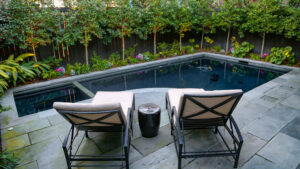
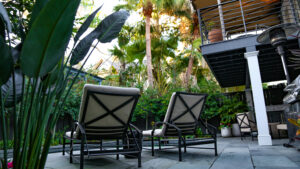
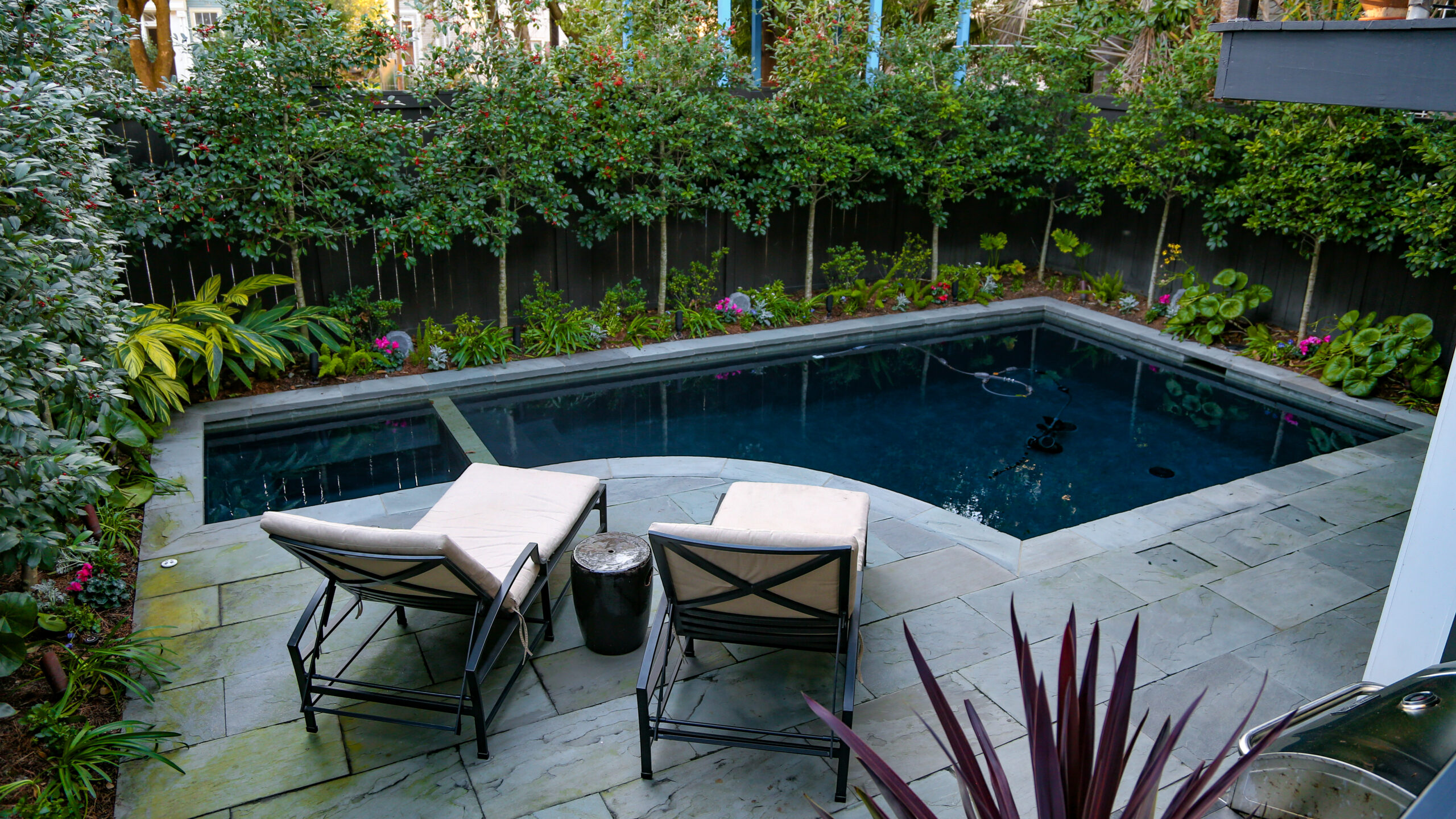
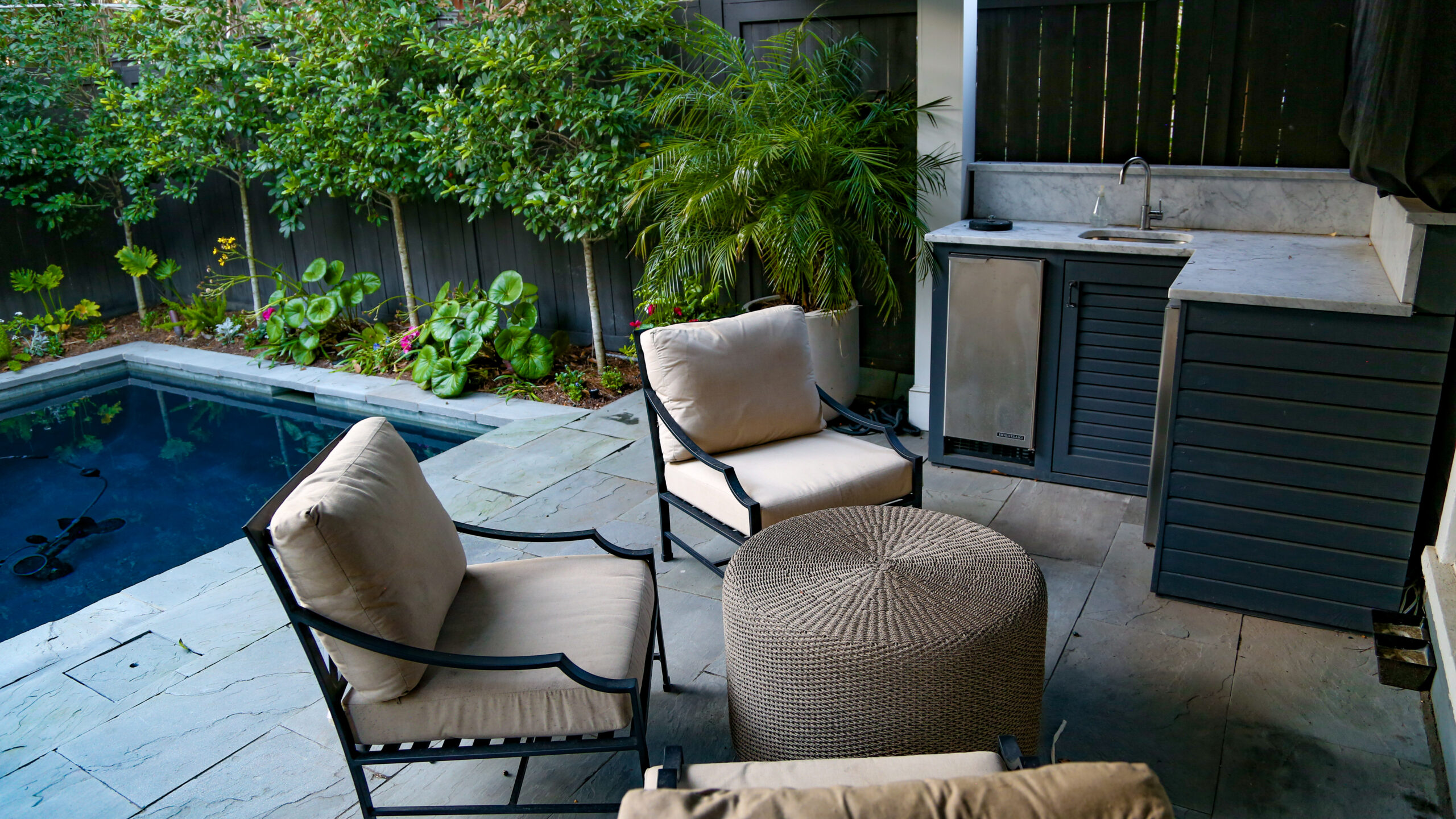
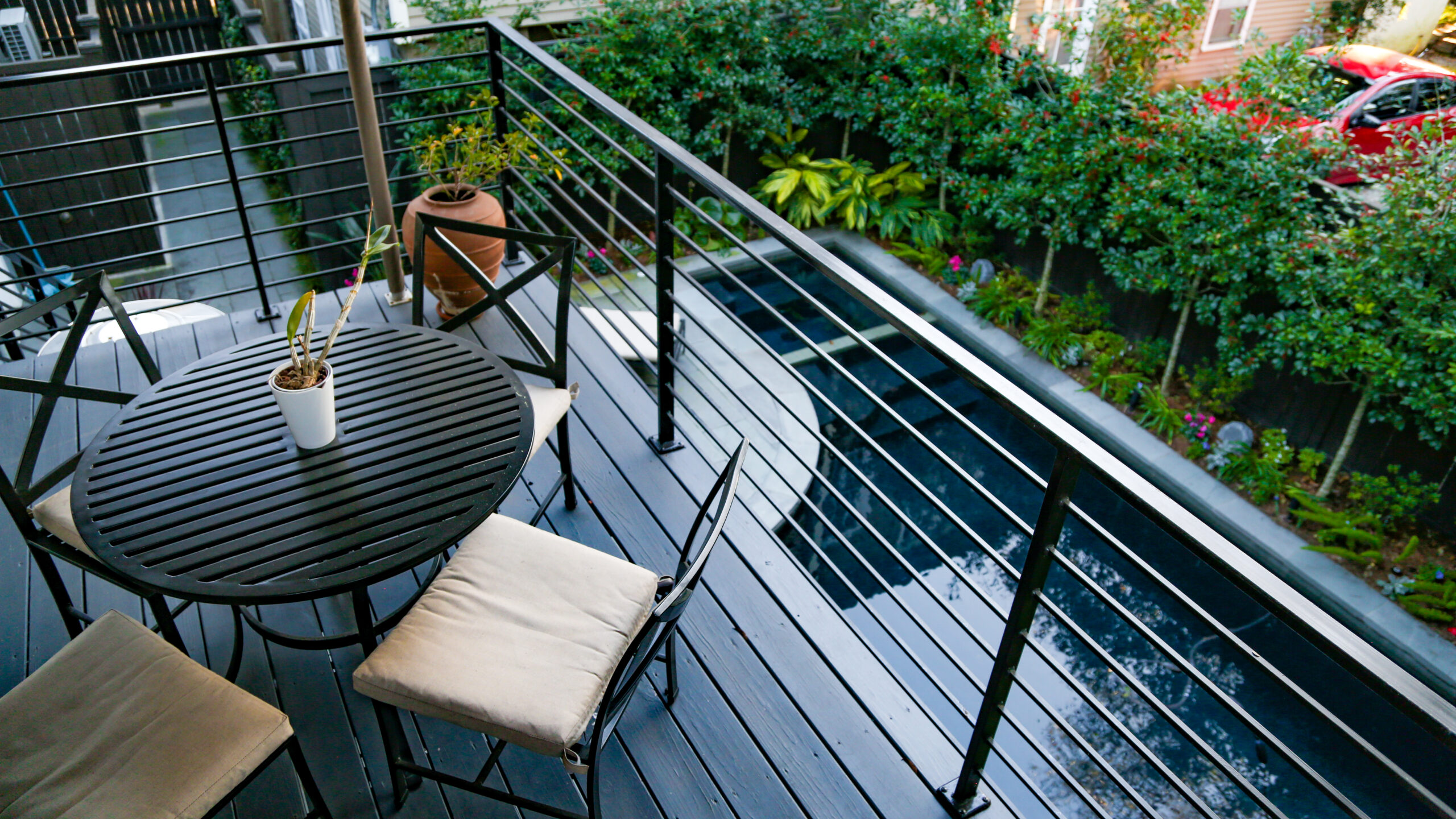
At this Baronne Street modern pool and contemporary home had already set a strong direction. However, the landscape needed to meet that architecture without making the space feel hard or overly controlled. For this poolside landscape design in Uptown New Orleans, landscape architect Kim Alvarez followed the clean lines already in place. She used planting to soften the edges and shape the views. As a result, the property gained a stronger sense of depth. The goal was not to hide the architecture. It was to make the garden and house feel as though they were designed in the same conversation.
Contemporary Pool Garden Design in Uptown New Orleans
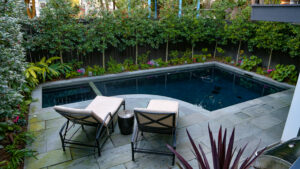
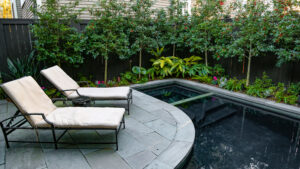
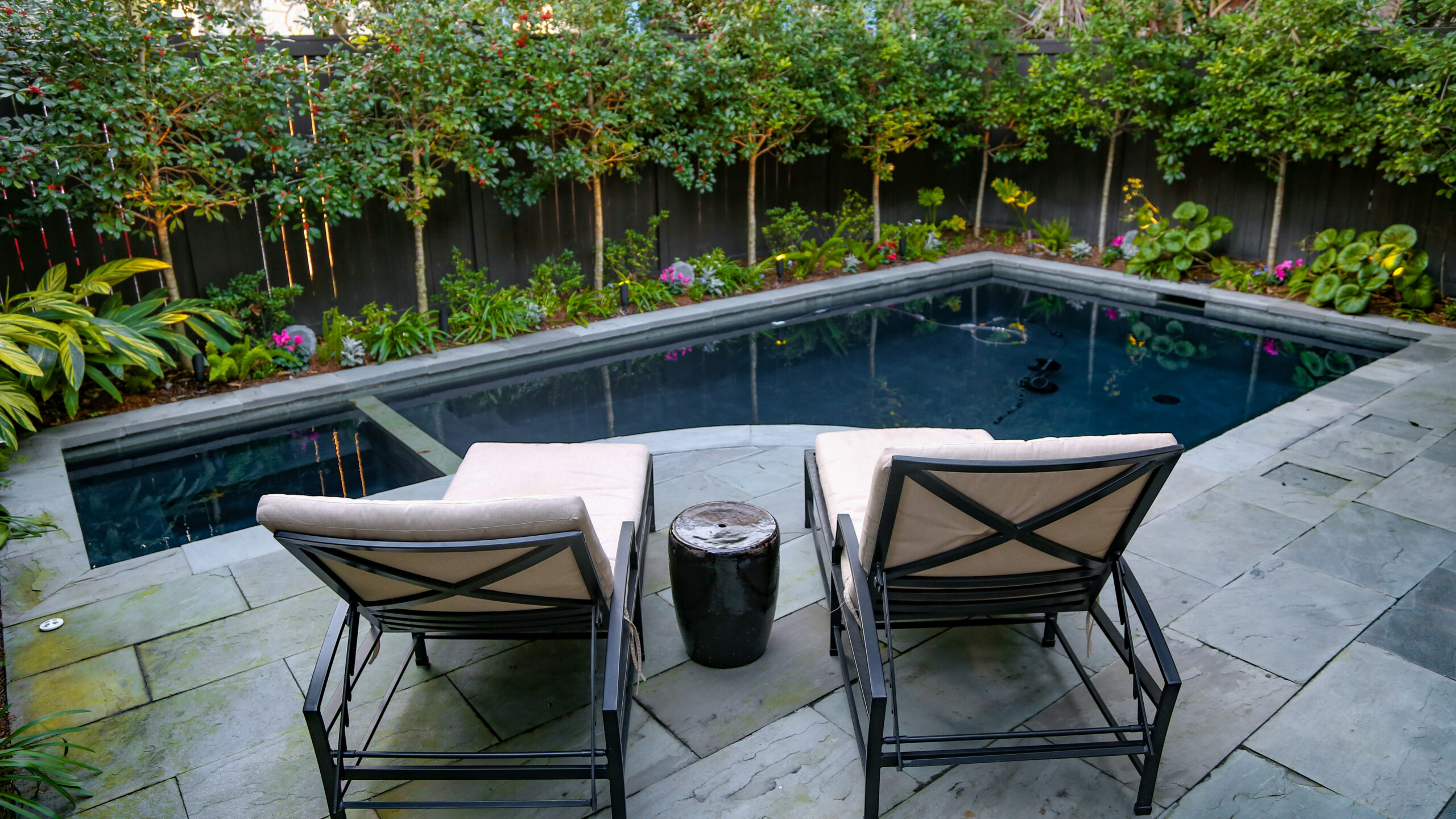
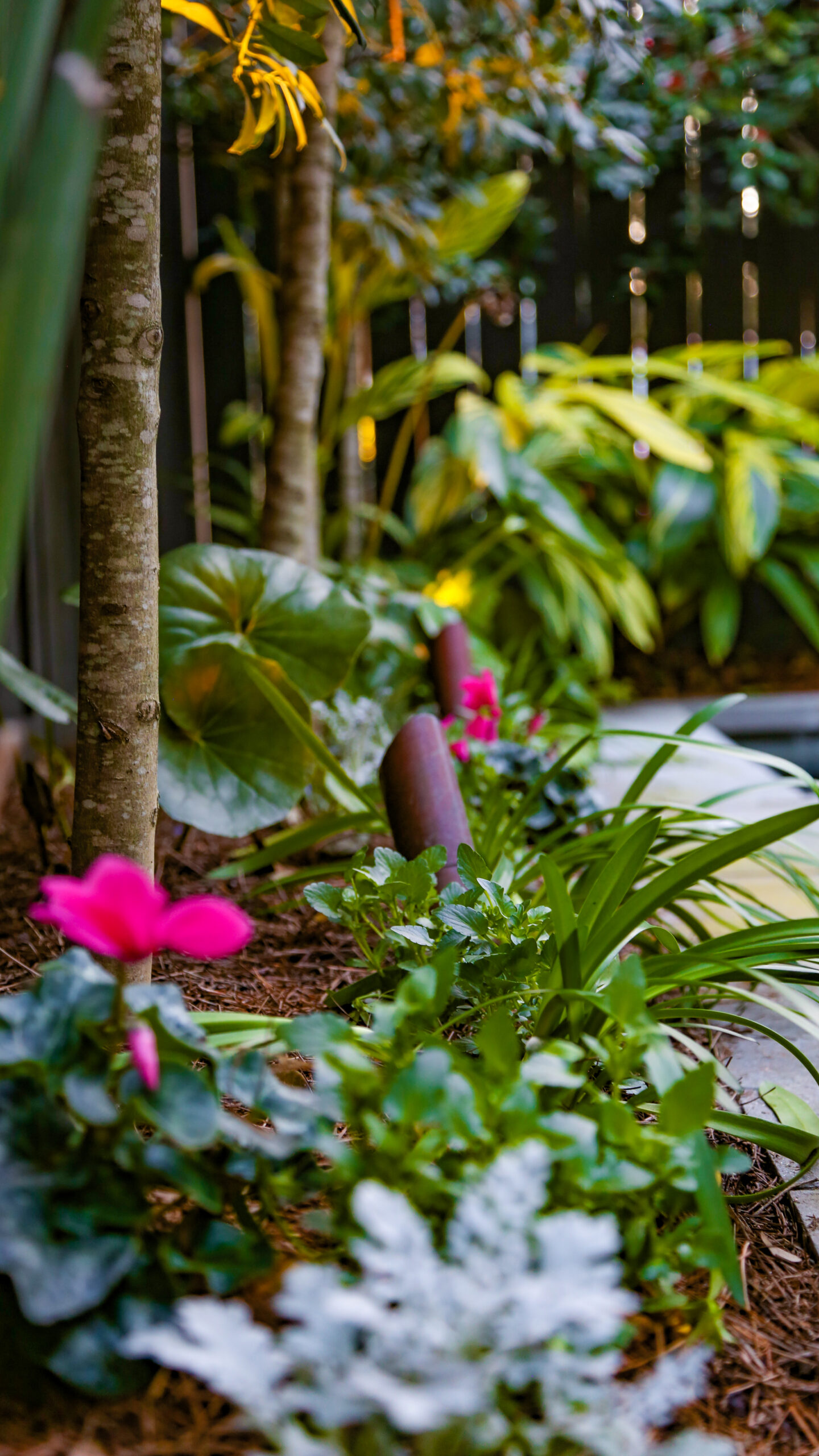
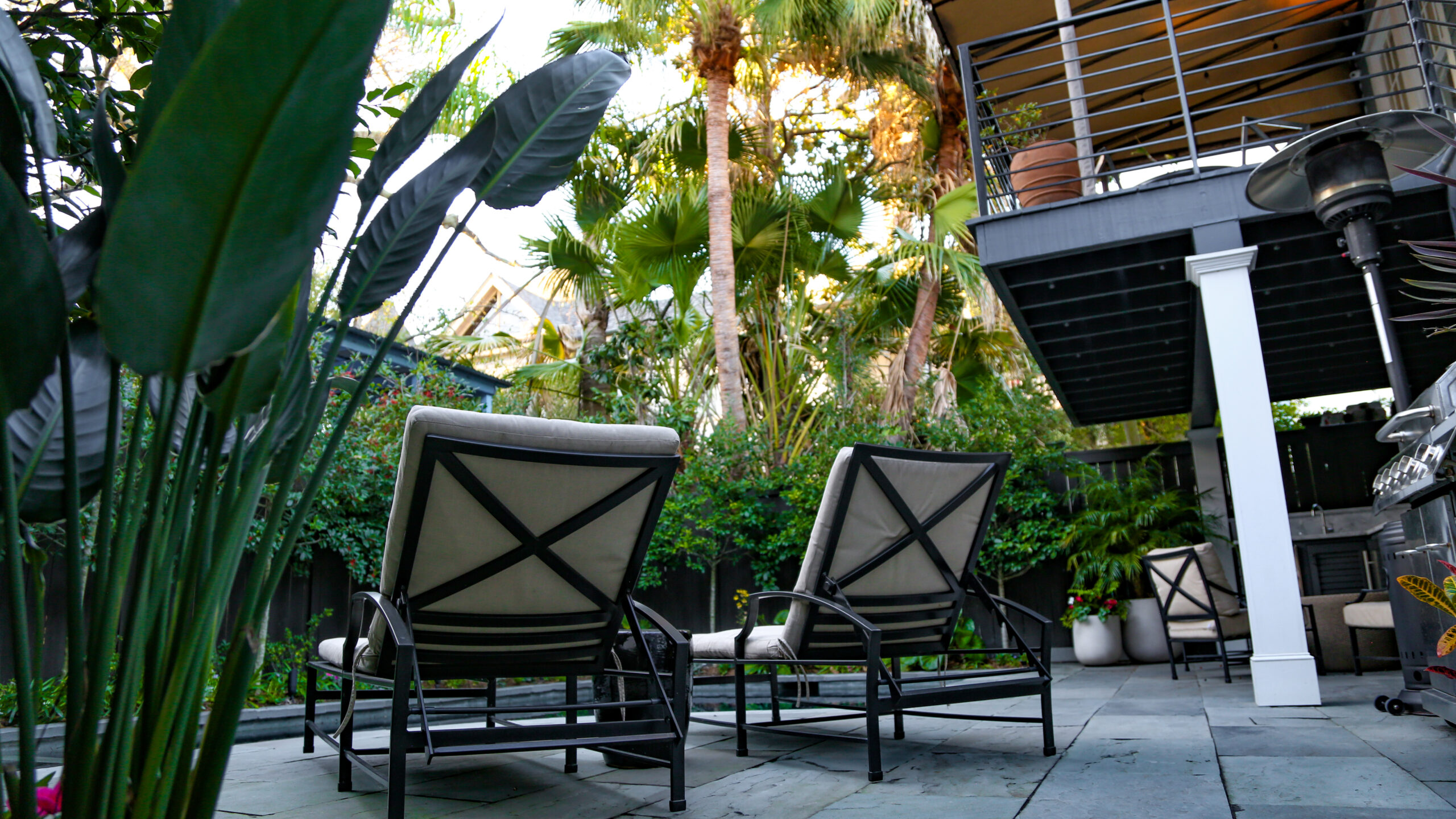
Kim built the landscape design around contrast. Robellini palms and bird of paradise bring height and movement near the pool, while clipped boxwood gives the beds a steady evergreen outline. Below them, ligularia adds broad leaves and a darker green that holds its own against the brighter surfaces surrounding the water. Meanwhile, caladium, torenia, and vinca bring seasonal color into the lower planting layer. Together, those plants keep the garden changing without losing its structure.
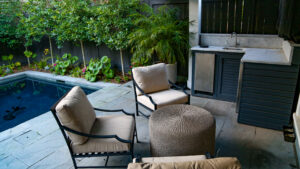
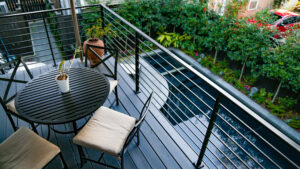
From inside the home, palms and foliage frame the pool without closing it off. From the water, layered beds soften the property line and pull the eye back toward the architecture. Repeated plant forms carry the same rhythm around the outdoor space, so no single bed feels disconnected from the rest. The best part? After sunset, low-voltage landscape lighting carries that structure into the evening. Carefully placed fixtures highlight palms, broad foliage, and the pool’s edges, so the garden remains part of the view long after daylight fades.
The final result is a contemporary pool garden with enough structure to feel composed and enough movement to feel alive—one that belongs to the architecture, but never disappears behind it.